Home Page Home Page
skinless, boneless frozen salmon about C. Wirthy Information about our frozen salmon products info about farm raised salmon nutrictional facts etc. Frequently asked questions salmon recipes contact us Restaurant, Hotel & Other Food Service Inquiries vacuum packed frozen salmon


  1. Heart Safe- Salmon reduces your risk of cardiac arrest
  2. Study - Finds Fish Oil Relieves Symptoms of Manic Depression
  3. Save Your Brain: Eat Fish!
  4. Arthritis Assist
  5. Fish, Omega-3 Fatty Acids, and Stroke Risk

Top of Page


Omega-3 are the essential fatty acids known as the “super-unsaturates”. They are a family of essential nutrients which when present in the diet over a long period of time, may have thousands of times the power of aspirin to stop the inflammatory reactions responsible for arthritis, migraines, colitis, and other similar ailments.

When added to the diet as a supplement they have the ability to not only lower cholesterol and triglycerides, but also to minimize the tendency of blood cells to clot - Omega 3 blocks formation of a substance called thromboxane, which is known as a blood clotting agent. In addition, Omega-3 are the basic building blocks for nerve tissue and brain cells.

It is concentrated throughout the food chain, but is most abundant in the oils of cold water fish such as salmon, sardines, herring, cod and mackerel.

WHAT OMEGA-3 CAN DO FOR YOU
Lower triglycerides in the blood. Lower low density cholesterol in the blood. Greatly reduce risk of heart disease. Aid in regulation of blood sugar levels. Reduce rate of inflammatory diseases like arthritis and migraine headaches. Reduces platelet “stickiness” and therefore reduces the tendency towards atherosclerosis - the clogging up of the arteries with cholesterol plaque. Inhibits tumor growth and lowers risk of cancer.

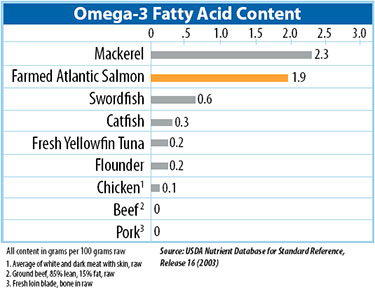
Food Omega-3
Farmed Atlantic Salmon 2.00*
Wild Chinnook Salmon 1.45
Farmed Coho Salmon 1.29
Wild Sockeye Salmon 1.25
Wild Chum Salmon 0.65
Ground Beef 0.03
Chicken Breast 0.06
Chicken Thigh 0.18
Pork Loin 0.18

WHAT IT DOES
Omega-3 fatty acids are powerful inhibitors of arachidonic acid metabolism in the human body. Some of these arachidonates, including some prostaglandins, are very powerful negative agents which the body synthesizes in response to various stressors. The main raw material for arachidonate synthesis comes directly from linoleic acid found in seed oils such as corn, cottonseed, sesame, safflower, sunflower and partially hydrogenated soybean oil.

The diseases in which arachidonates have been implicated are:

Migraines, Arthritis, Allergic Reactions, Ulcers, Colitis, Lupus, Coronary Thrombosis, Bronchial Asthma, Hypertension, Diabetes, Kidney Dialysis, Cancer.


Top of Page

Omega-3 and Heart Disease

The Journal of the American Medical Association reports that Omega-3 fatty acids in such fish as salmon and albacore tuna reduce a woman's risk of heart disease by one-third. The New England Journal of Medicine reports a decline of about 80 percent in men.

" Omega-3 is a natural fatty acid, but not high-saturated fat-a contributor to high cholesterol," said Sharon McNerney, a registered dietitian from California. "A healthful, balanced diet that includes omega-3 foods like salmon and albacore tuna is known to help reduce the risk of heart disease, and these recent reports further emphasize that, particularly for women."

The "Mayo Clinic Heart Book" outlines easy-to-follow tips to avoid heart disease, including eating fish that contains Omega-3 to reduce the risk of dangerous blood clotting. The American Heart Association recommends two servings of fish per week for the benefits of Omega-3.

Another recent study shows pregnant and nursing women may be able to reduce the development of postpartum depression with a higher consumption of Omega-3.

Omega-3 and Brain Development in Infants

The study, released at the national meeting of the American Chemical Society, also shows neurological development of babies can improve when mothers increase their consumption of foods rich in Omega-3, such as albacore tuna and salmon.

People should eat salmon or other fish twice or three times a week. It's packed with nutrients and complex vitamins, such as calcium, B vitamins, phosphorus, zinc, and iron.

More information about the benefits of Omega-3 can be found here

Top of Page


A 3-½ ounce (raw) serving of Salmon contains 2,18gr saturated fat, 1,9gr Omega-3, 59mg of cholesterol, and a total fat of 10,85gr.


Articles:

Healthy Hearts Salmon reduces incidence of CardiaC Arrest

According to an article in the November 1, 1995 issue of The Journal of the American Medical Association (Vol. 274, No. 17), one serving of fatty-fish per week, such as salmon, can reduce the risk of cardiac arrest.

Based on a survey of food intake, researchers found: "An intake of 5.5 grams of n-3 fatty acids per month was associated with 50 percent reduction in the risk of primary cardiac arrest."

An 84 gram (three ounce) serving of cooked fresh salmon (a fatty fish) contains 1.49 grams of n-3 fatty acids. Four servings of salmon per month would provide 5.96 grams of Omega-3 fatty acids, enough to reap the cardiac benefits, according to the study.

The researchers found that small increases in the percentage of Omega-3 fatty acids in the total fatty-acid level could substantially lower the risk of heart attack. "Our findings suggest an inverse relation of both dietary intake and red blood cell membrane levels of n-3 polyunsaturated fatty acids with the risk of primary cardiac arrest. . . The consistency of the findings using two different approaches to the measurement of Omega-3 polyunsaturated fatty acid intake from seafood -- a food frequency questionaire and a biomarker -- enhances considerably the validity of our findings."

"Taken together, the data suggest that when compared to no seafood intake, dietary intake of modest amounts of Omega-3 fatty acids from seafood may reduce vulnerability to ventricular fibrillation and, thereby, reduce the risk of coronary heart disease mortality. Additional clinical trials to assess the effectiveness of efforts to enhance dietary intake of Omega-3 polyunsaturated fatty acids for the prevention of primary cardiac arrest should be considered."

Top of Page

Study Reaffirms Value Of Eating Fatty Fish

HEART ATTACKS: The acids help prevent irregular heartbeats. By CINDY TUMIEL - San Antonio Express-News

SAN ANTONIO - Older people who eat at least one serving of fatty fish like mackerel or salmon each week are less likely to die from a heart attack, according to a study by scientists in Washington state.

The findings add more data to a growing body of evidence about the health benefits of fish that are rich in Omega-3 fatty acids, said Dr. David Siscovick,a professor of medicine and epidemiology at the University of Seattle's Cardiovascular Health Research Unit.

"We found that eating modest amounts of fatty fish was associated with a 44 percent lower risk in fatal heart attacks," Siscovick said. So-called fatty fish like salmon have higher amounts of Omega-3 fatty acids than leaner fish like cod and snapper. Omega-3 fatty acids are believed to reduce the risk of arrhythmias, or irregular heartbeats, that can trigger fatal heart attacks.

Contemporary research has shown Omega-3s are integral to development of visual acuity in children and has beneficial ef fects on patients with inflammatory or autoimmune illnesses like lupus, arthritis and Crohn's disease, Simopoulos said. "The current study bolsters earlier findings about heart benefits of Omega-3. We've had very good clinical studies that show (Omega-3 fatty acids) lower blood pressure, lower triglyceride (blood fat) levels and lower the tendency for thrombosis (blood clots)".

Top of Page

Effects of Omega-3 Polyunsaturated Fatty Acids on Breast Cancer
By Lisa Shapiro - ABSTRACT

Epidemiological observations reveal that Japanese women, who eat a low-fat diet with a high fish consumption, have a much lower incidence of breast cancer than North American and European women who eat a higher fat diet rich in omega-6 polyunsaturated fats.

This observation has been supported by experimental research that Omega-6 fatty acids like corn and safflower oil can promote tumor growth, and Omega-3 fatty acids found in fish oil can inhibit tumor growth. Omega-3 fatty acids serve a protective role against breast cancer by competitively inhibiting harmful Omega-6 metabolites that may be responsible for tumor promotion.

This research holds promise for possible clinical applications including breast cancer risk screening, dietary prevention, and therapeutic dietary intervention for breast cancer patients.

Top of Page

Visit Acorn Interactive On-lIne
home - about us - product - real scoop - faq - recipes - contact - food service
link to us -
salmon resources | seafoods | salmon fishing | food service | health related