
Health & Wellness
Salmon really IS good for you!
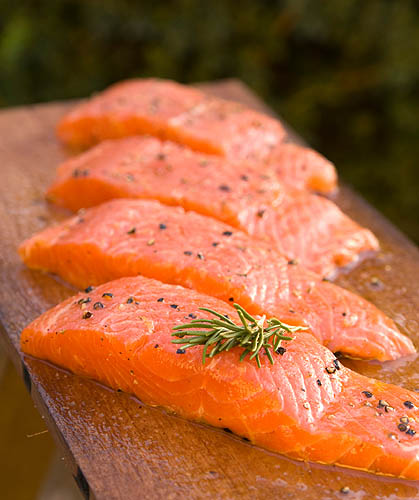
Eating right CAN be easy. Start by incorporating ocean-farmed salmon into your regular meal plan. There’s nothing more satisfying and necessary for your well-being because unlike other sources of protein such as chicken, beef or pork, salmon provides you with Omega-3 fatty acids that have been linked to numerous health benefits.
High in Protein, Low in Calories and Saturated Fat
Ocean-farmed salmon is an ideal source of high quality, affordable protein. Protein provides essential amino acids which are vital for growth and muscular development. A diet high in protein usually means a more efficient metabolism which helps in weight loss and maintenance. Ocean-farmed salmon has approximately one-third of the saturated fat as lean ground beef and 50 percent less saturated fat than chicken which makes it the healthy choice.
Contains Omega-3 Fatty Acids
Important nutritionally essential Omega-3 fatty acids are: a-linolenic acid (ALA), eicosapentaenoic acid (EPA), and docosahexaenoic acid (DHA). These “essential” fatty acids were given their name when researchers found that they were necessary for normal growth. Our bodies do not create these essential fatty acids so we need to supplement our diets with foods like salmon that naturally provide these vital nutrients.
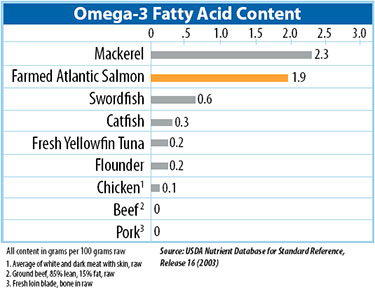
Omega-3 fatty acids can be readily found in fish but ocean-farmed Atlantic salmon is one of the best sources due to its Omega-3 content, affordability and year-round availability.
100 Percent Natural – No Added Color
All salmon, including those farmed, get their beautiful and appetizing color from what they eat. Our farmed salmon are fed a diet which includes carotenoids that are the same found in what their wild counterparts eat such as krill and shrimp. Carotenoids are also found in plants and algae and are instrumental in photosynthesis. In fact, all living organisms need carotenoids for proper development and growth. Carotenoids are in the same nutritional category as Vitamin A which promotes good health and acts as an antioxidant for both fish and humans. A type of carotenoid most people are familiar with is Beta-carotene which give carrots their orange color. The type of carotenoid we add to our feed is approved by the FDA of the United States and other regulatory agencies around the world. The Food and Drug Administration requires a color-added statement because the feed (not the salmon) contains a carotenoid substance. Our salmon are never dyed or injected directly with any artificial coloring.
Perfecting and Protecting What Goes on Your Plate
Our farms employ the latest technology in harvesting, processing and distribution and follow the guidelines established by the FDA and other international regulatory bodies. By monitoring the health of our fish, we give you the confidence of knowing that you’re eating right and promoting a life of well-being. Our fish come from Chile. This country is not only a leader in aquaculture technology but they also have the perfect geographic conditions to raise healthy fish with long coastlines and proper sea temperatures as well as unpolluted water. The careful harvesting of our salmon includes:
For More Information
All of the information and evidence provided here while promising is not conclusive at this time. New research is continuously being conducted to validate the health benefits of eating salmon. For more information and to substantiate the data presented, please refer to the following websites:
U.S. Food and Drug Administration at www.fda.govAmerican Heart Association at www.americanheart.org
American Diabetes Association at www.diabetes.org
Arthritis Foundation at www.arthritis.org
Salmon of the Americas Salmon Facts at www.salmonfacts.org